


-
Introduction
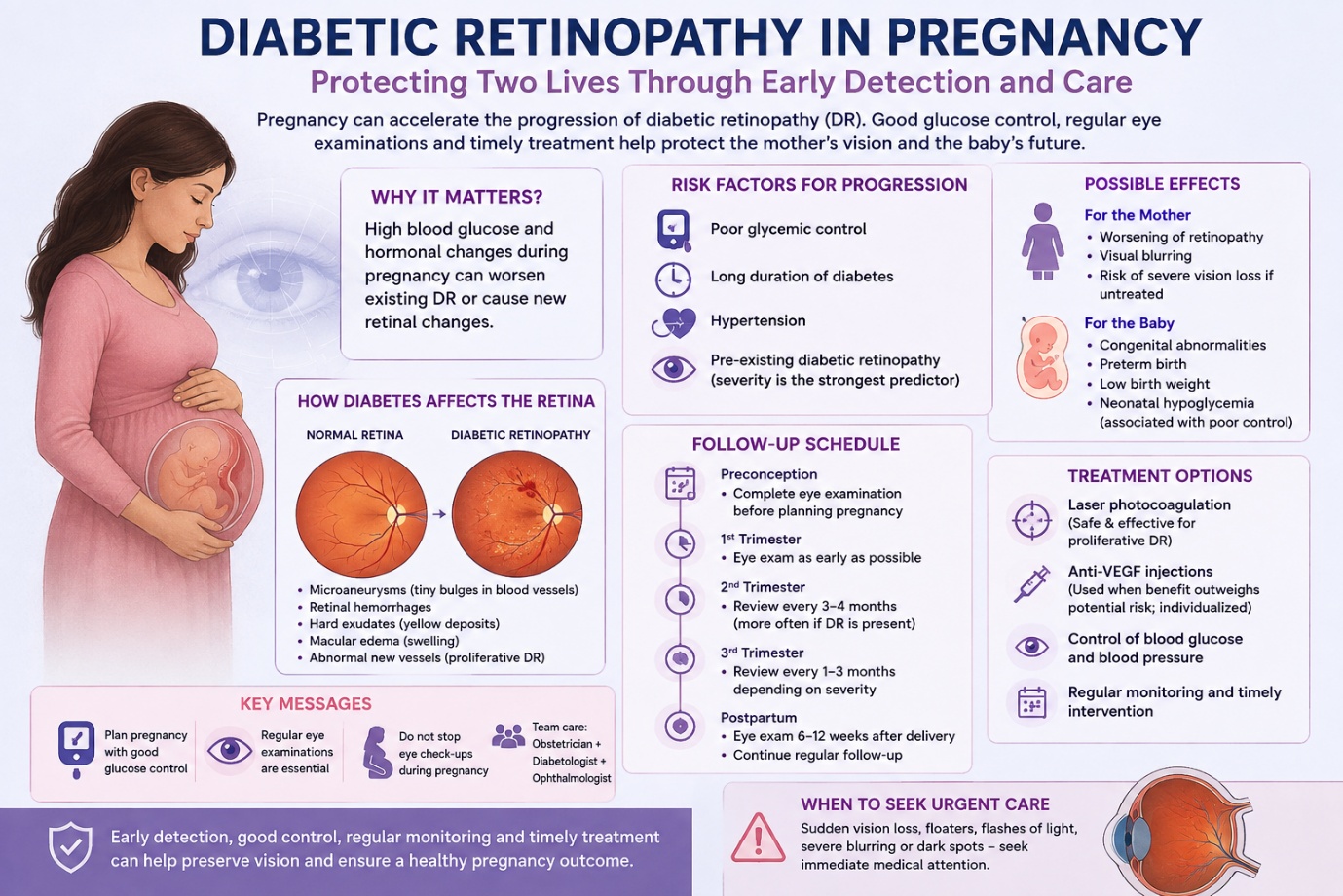
Diabetic retinopathy (DR) is a complication of diabetes that affects the retina, the light-sensitive tissue at the back of the eye. Pregnancy can influence the course of diabetic retinopathy, particularly in women who already have retinal disease before conception. The risk of progression depends on factors such as the severity of retinopathy at conception, duration of diabetes, blood-glucose control, and blood pressure.
Pregnancy itself does not mean that a woman will necessarily develop diabetic retinopathy. However, because progression can occur during pregnancy, pre-pregnancy retinal assessment and appropriate follow-up are important components of diabetes care. Current NICE guidance recommends retinal assessment before pregnancy and advises that existing retinopathy should be assessed and treated appropriately.
-
Why Does Pregnancy Affect Diabetic Retinopathy?
Pregnancy produces substantial changes in metabolism and circulation. Changes in blood-glucose control, blood pressure, blood volume, and vascular function can influence the small blood vessels of the retina.
The risk is particularly important when diabetic retinopathy is already present before pregnancy. Rapid improvement in very poor glycaemic control can also temporarily increase the risk of progression of retinopathy. For this reason, NICE recommends retinal assessment before rapid optimisation of blood glucose in people planning pregnancy.
-
Pre-Pregnancy Counselling
Pre-pregnancy counselling is an important part of preventing vision-threatening complications.
A woman with diabetes who is planning pregnancy should be counselled about the possibility of diabetic retinopathy progression and the importance of retinal examinations. A retinal assessment should be performed before conception unless an appropriate assessment has already been performed within the preceding six months.
Counselling should include discussion of:
- The current condition of the retina.
- The possibility of progression during pregnancy.
- Blood-glucose and blood-pressure management.
- The importance of attending scheduled retinal examinations.
- Any treatment that may be required before pregnancy.
- The safety of medications being taken for diabetes and its complications.
Pre-pregnancy care is ideally coordinated between the obstetrician, physician/diabetes team, and ophthalmologist.
-
Eye Assessment Before Pregnancy
A comprehensive retinal assessment helps determine the woman’s baseline eye status.
The examination may include:
Visual acuity: This measures how clearly the patient can see.
Dilated retinal examination: The ophthalmologist examines the retina for signs of diabetic damage.
Retinal photography: Photographs can document the condition of the retina and allow comparison during subsequent examinations.
Optical coherence tomography (OCT): When clinically indicated, OCT can provide detailed images of the retinal layers and help assess diabetic macular oedema.
The findings establish a baseline against which later changes can be compared.
-
Treatment Before Pregnancy
If significant diabetic retinopathy is detected before conception, treatment should be considered before pregnancy when appropriate.
The treatment depends on the type and severity of retinal disease. Panretinal photocoagulation (PRP) is an established treatment for proliferative diabetic retinopathy and may be particularly important when sight-threatening proliferative disease is present.
Diabetic macular oedema requires individualized management. Treatment decisions during pregnancy are more complicated because some retinal medications require careful consideration regarding fetal and maternal safety.
-
Risk Factors for Progression
Several factors can increase the likelihood of diabetic retinopathy progressing during pregnancy.
Duration of Diabetes
A longer duration of diabetes generally increases the likelihood that retinopathy will already be present before pregnancy.
Severity of Retinopathy Before Pregnancy
A woman with moderate or severe retinopathy at the beginning of pregnancy has a greater risk of progression than someone with no retinopathy.
Poor Glycaemic Control
Persistently elevated blood glucose is associated with diabetic retinal damage. However, very rapid improvement in severely uncontrolled diabetes can also temporarily increase the risk of retinopathy progression, which is why retinal assessment is important when planning intensive glucose optimisation.
Hypertension
High blood pressure can contribute to retinal vascular damage and increase the risk of progression.
Pre-existing Diabetic Macular Oedema
Macular oedema can affect central vision and requires careful monitoring.
Type of Diabetes
Pregnancy-related progression has historically been particularly well documented in people with type 1 diabetes, although women with type 2 diabetes can also have progression.
-
Follow-Up During Pregnancy
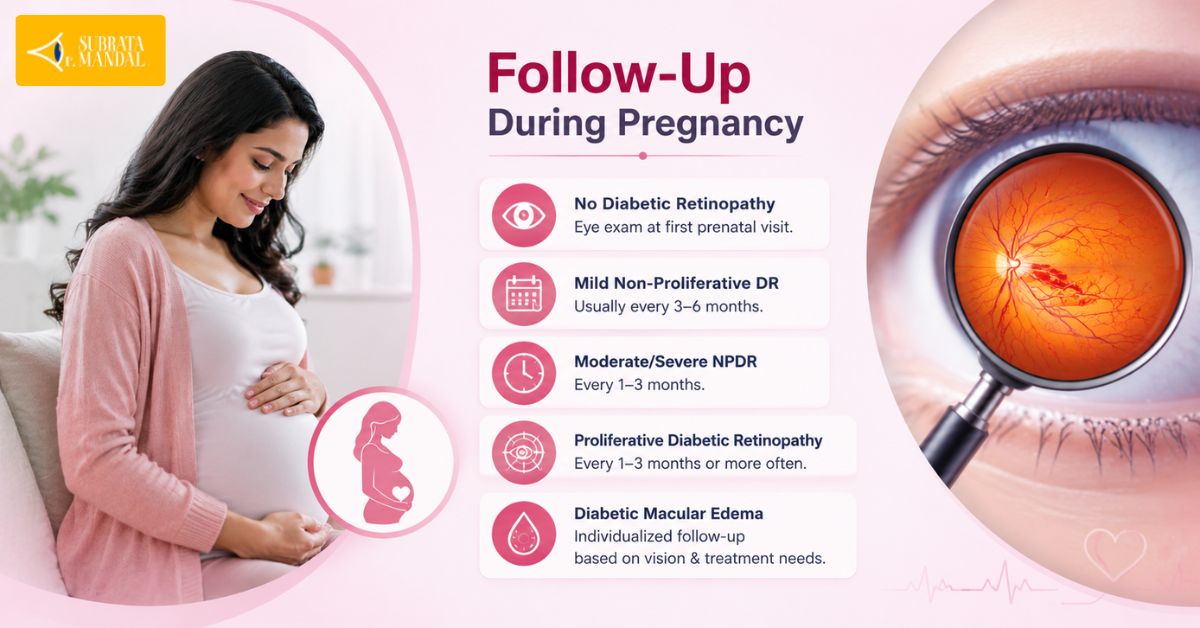
The follow-up schedule depends mainly on whether diabetic retinopathy is present, how severe it is, and whether it is changing. There is no single schedule that applies to every pregnant woman.
| Eye status | Suggested follow-up |
| No diabetic retinopathy | Eye examination at the first prenatal visit/early pregnancy, followed by repeat examination according to the ophthalmologist’s assessment. |
| Mild non-proliferative diabetic retinopathy (NPDR) | Usually every 3–6 months, with closer monitoring if the retinopathy progresses. |
| Moderate/severe NPDR | More frequent examinations, often around every 1–3 months, depending on severity and specialist assessment. |
| Proliferative diabetic retinopathy (PDR) | Very close ophthalmic follow-up, often every 1–3 months or more frequently when active disease is present. |
| Diabetic macular edema (DME) | Follow-up is individualized according to vision, retinal findings, and treatment requirements. |
The purpose of follow-up is to detect:
- Progression of non-proliferative diabetic retinopathy.
- Development or progression of proliferative diabetic retinopathy.
- Diabetic macular oedema.
- New symptoms affecting vision.
The ophthalmologist should determine the examination interval based on the retinal findings and clinical circumstances.
-
Treatment During Pregnancy
Treatment during pregnancy is selected carefully, with consideration of both the mother’s vision and the developing fetus.
Laser Treatment
Panretinal photocoagulation is an important treatment for proliferative diabetic retinopathy. When clinically necessary, laser treatment can be performed during pregnancy. Laser is particularly valuable because it can treat sight-threatening proliferative disease without requiring repeated exposure to a systemic drug.
Treatment of Diabetic Macular Oedema
Diabetic macular oedema requires individualized assessment. Depending on the circumstances, laser or other treatments may be considered.
Anti-VEGF Therapy
Anti-vascular endothelial growth factor (anti-VEGF) injections are widely used for several retinal conditions, including diabetic macular oedema. However, their use during pregnancy requires particularly careful consideration because evidence regarding fetal safety is limited. The decision should therefore be made by an ophthalmologist together with the relevant pregnancy-care team when the potential benefits outweigh the risks.
-
Importance of Blood-Glucose and Blood-Pressure Control
Good control of diabetes is essential for protecting the retina.
Management should aim for appropriate blood-glucose levels during pregnancy while avoiding dangerous episodes of low blood glucose. Blood pressure should also be monitored and treated appropriately.
Importantly, eye care should not be separated from diabetes and obstetric care. Changes in metabolic control can influence the retina, so communication between healthcare professionals is important.
-
Postpartum Follow-Up
Retinal monitoring should not automatically stop after delivery. The appropriate postpartum examination depends on the severity of retinopathy during pregnancy and whether treatment was required.
Women who developed or had progression of significant diabetic retinopathy during pregnancy may require continued ophthalmic monitoring after delivery.
Postpartum diabetes care should also include continued attention to blood glucose and blood pressure.
-
Prognosis
The prognosis of diabetic retinopathy in pregnancy is generally favourable when the condition is identified early and appropriately monitored and treated.
Pregnancy can cause progression, especially when significant retinopathy is already present. However, progression does not necessarily result in permanent severe visual loss. Early detection and treatment of sight-threatening disease can substantially reduce the risk of serious visual complications.
Historical studies summarized by the Royal College of Ophthalmologists found that progression was possible during pregnancy, particularly in women with pre-existing retinopathy, while also emphasizing the importance of pre-conception assessment and monitoring.
-
Warning Symptoms
A pregnant or recently postpartum woman with diabetes should seek prompt medical assessment if she develops:
Sudden blurred or reduced vision, new flashes of light, a sudden increase in floaters, distortion of central vision, or sudden loss of vision. These symptoms should not simply be attributed to pregnancy or diabetes without an examination.
-
Multidisciplinary Care
The best management of diabetic retinopathy during pregnancy involves cooperation between several healthcare professionals.
The diabetes physician manages glucose control and diabetes-related factors.
The obstetrician monitors pregnancy and maternal-fetal health.
The ophthalmologist or retinal specialist assesses and treats diabetic retinopathy.
This multidisciplinary approach allows changes in the retina to be detected while simultaneously addressing the metabolic and pregnancy-related factors that influence retinal health.
-
Conclusion
Diabetic retinopathy is an important consideration in women with diabetes who are planning pregnancy or are already pregnant. Pregnancy may increase the risk of progression, particularly when retinopathy is present before conception. Pre-pregnancy retinal assessment, appropriate treatment before or during pregnancy, individualized ophthalmic follow-up, and careful management of blood glucose and blood pressure are the foundations of care.
The overall aim is to maintain the mother’s vision while supporting a healthy pregnancy. Current guidance emphasizes retinal assessment before pregnancy and continued monitoring according to the severity of diabetic eye disease.
-
Remember
“In diabetic pregnancy, protecting the mother’s vision begins before conception, continues through every stage of pregnancy, and depends on early detection, careful monitoring, and timely treatment.”
Note: This is an educational chapter, not an individual treatment plan. The exact examination intervals and treatment decisions must be determined by the patient’s ophthalmologist and pregnancy-care team.