

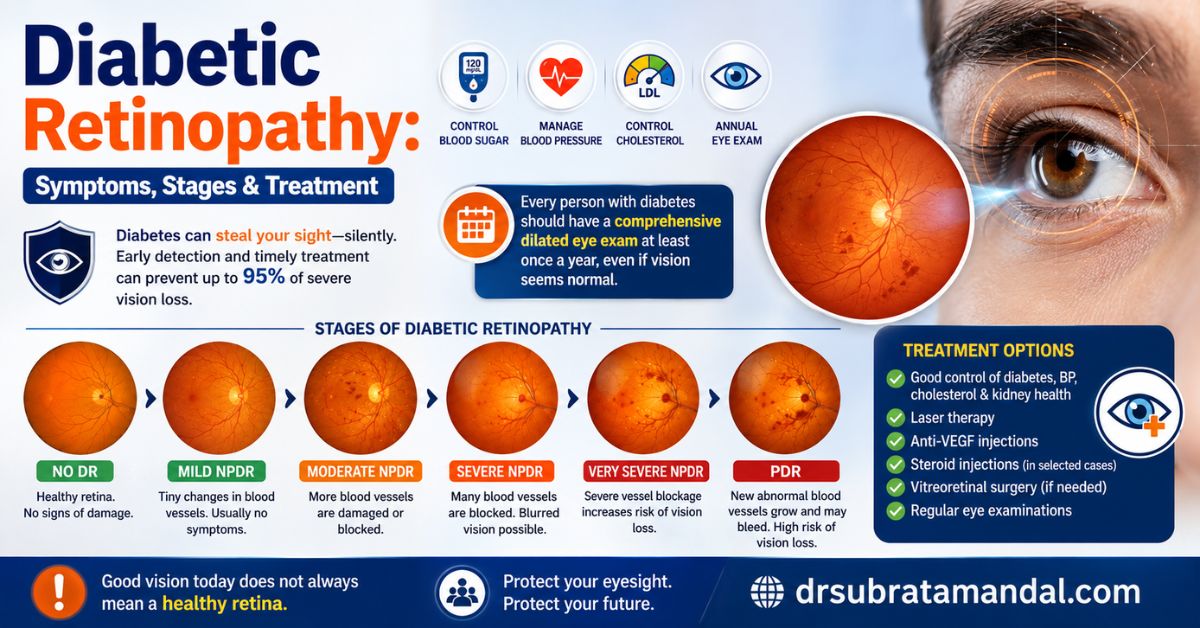
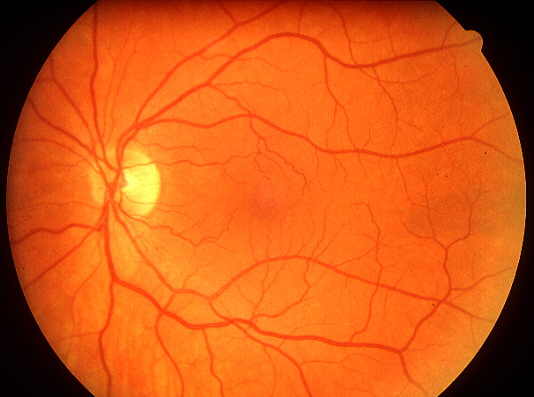
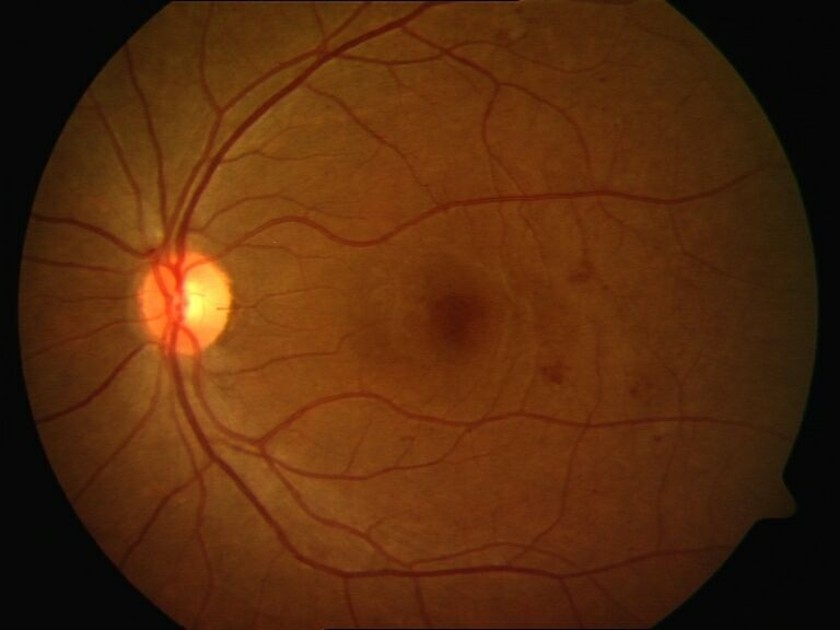
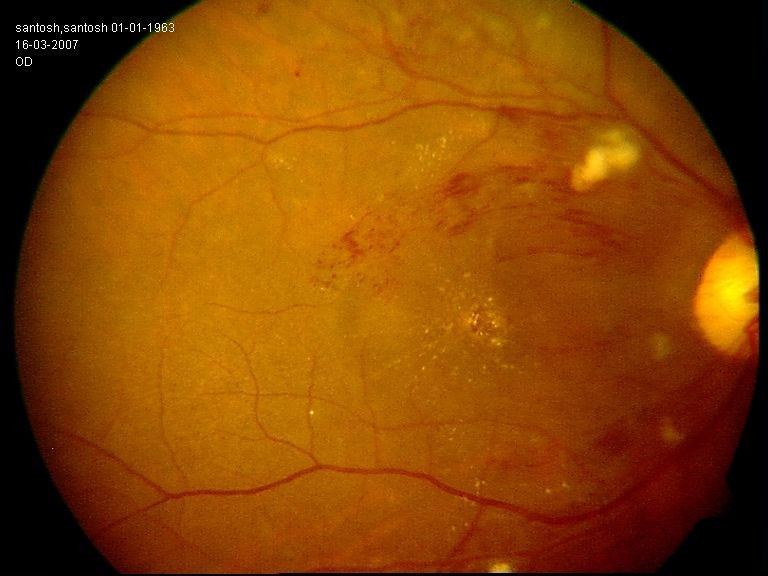
Stages of Diabetic Retinopathy and Recommended Follow-up Schedule
| Stage | What Happens? (Simple Explanation) | Common Symptoms | Recommended Follow-up* |
| No Diabetic Retinopathy | The retina is healthy, but diabetes can still damage it in the future. | No symptoms | Every 12 months |
| Mild Non-Proliferative Diabetic Retinopathy (Mild NPDR) | Tiny blood vessels become weak and develop small bulges. Some may leak a little fluid or blood. | Usually no symptoms; vision is normal | Every 12 months |
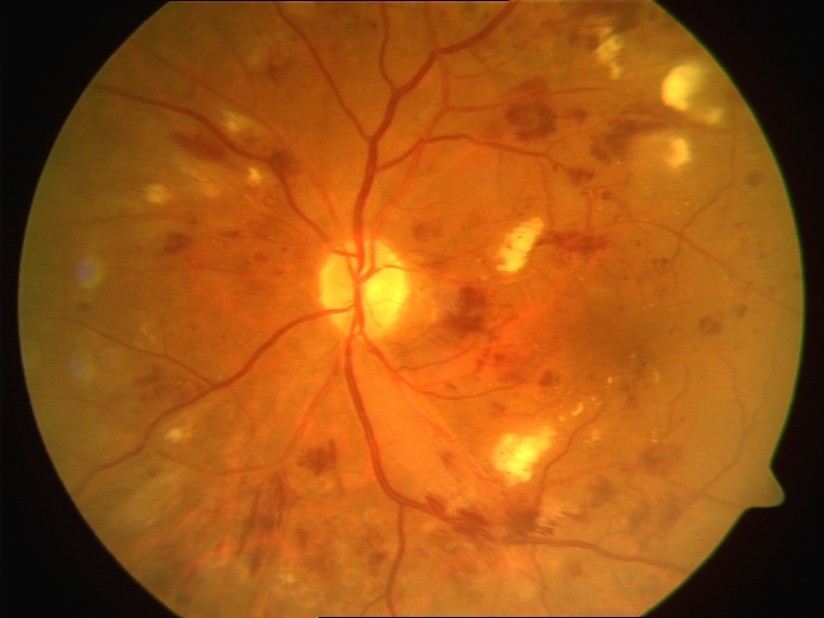
| Moderate Non-Proliferative Diabetic Retinopathy (Moderate NPDR) | More blood vessels become damaged or blocked. | Usually no symptoms; mild blurring may occur | Every 6–12 months |
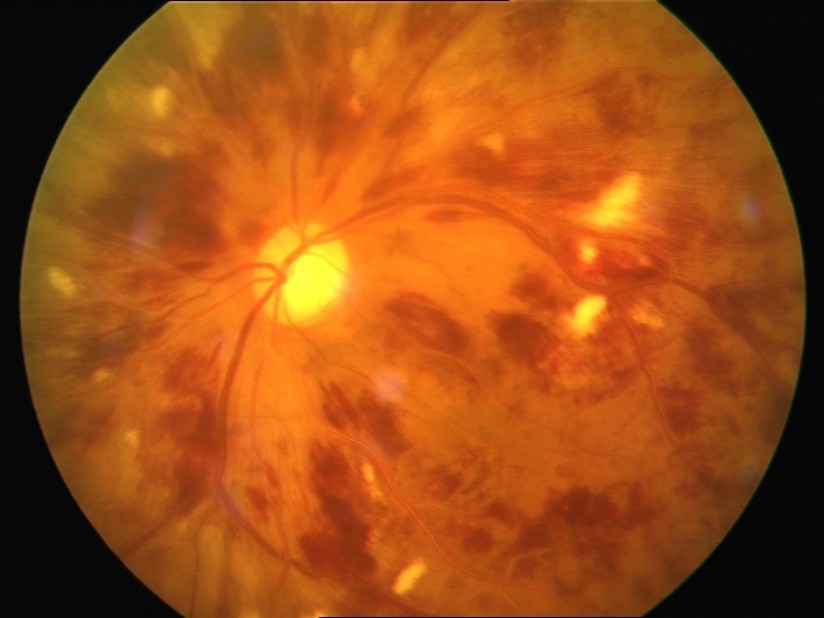
| Severe Non-Proliferative Diabetic Retinopathy (Severe NPDR) | Many blood vessels are blocked, reducing oxygen supply to the retina. | Blurred vision or no symptoms | Every 2–4 months |
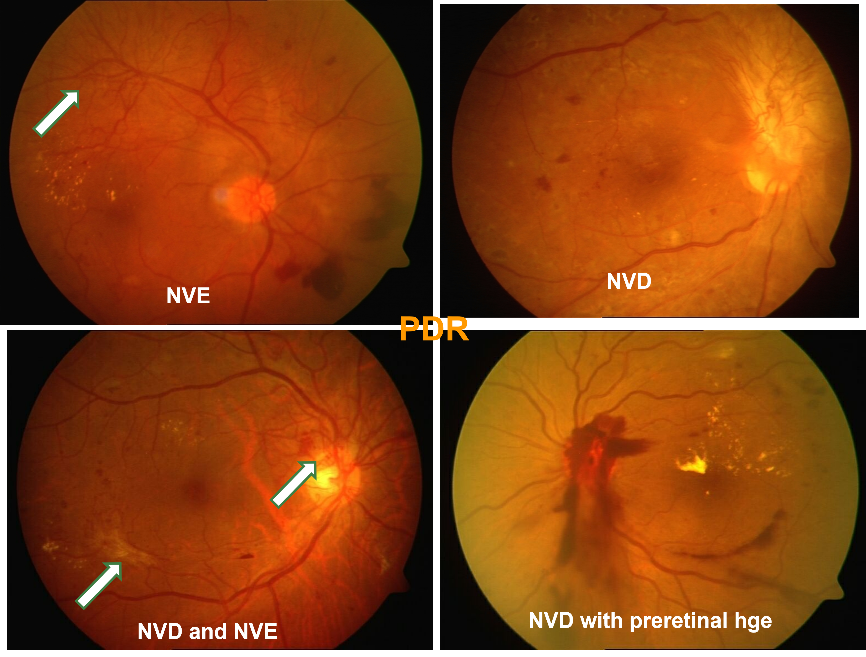
| Proliferative Diabetic Retinopathy (PDR) | New, fragile blood vessels grow and may bleed inside the eye, causing serious vision problems. | Floaters, blurred vision, sudden vision loss | Every 1–3 months (or as advised by the retina specialist) |
| Diabetic Macular Edema (DME) (Can occur at any stage) | Fluid leaks into the central part of the retina (macula), affecting sharp vision. | Blurred or distorted central vision, difficulty reading | Every 1–4 months, depending on treatment |
Treatment of Diabetic Retinopathy
Treatment depends on the stage of diabetic retinopathy and whether the macula (the centre of vision) is affected.
Good Control of Diabetes
- Control ABCD: Anaemia, BP, Creatinine, Diabetes
- Exercise regularly and eat a healthy diet.
- Stop smoking.
Regular Eye Examinations
- Have a dilated eye examination at least once a year, or more often if advised by your eye doctor.
- Early detection can prevent vision loss.
Eye Injections (Anti-VEGF Medicines)
- Medicines are injected into the eye to reduce swelling and stop the growth of abnormal blood vessels.
- Commonly used for diabetic macular edema (DME) and proliferative diabetic retinopathy (PDR).
- It is also used5-7 days before vitreo-retinal surgery
Eye injections (steroids)
- Medicines are injected into the eye to reduce swelling
Laser Treatment
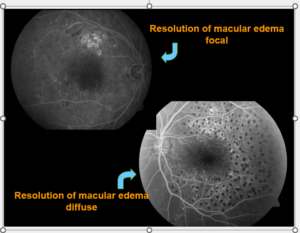
- Laser seals leaking blood vessels and reduces the growth of abnormal new blood vessels.
- Helps prevent further vision loss.
Vitrectomy Surgery
- Performed when there is severe bleeding inside the eye or retinal detachment.
- Removes blood and scar tissue from the vitreous (the gel inside the eye).
Ongoing Follow-up
- Regular follow-up visits are essential because diabetic retinopathy can worsen over time.
- Timely treatment and monitoring help preserve vision.Remember: Don’t wait for blurred vision to visit an eye doctor. By the time you notice symptoms, it may already be late. A simple yearly eye examination can protect your sight for a lifetime.